Football Betting Stats: How to Read the Numbers That Actually Matter
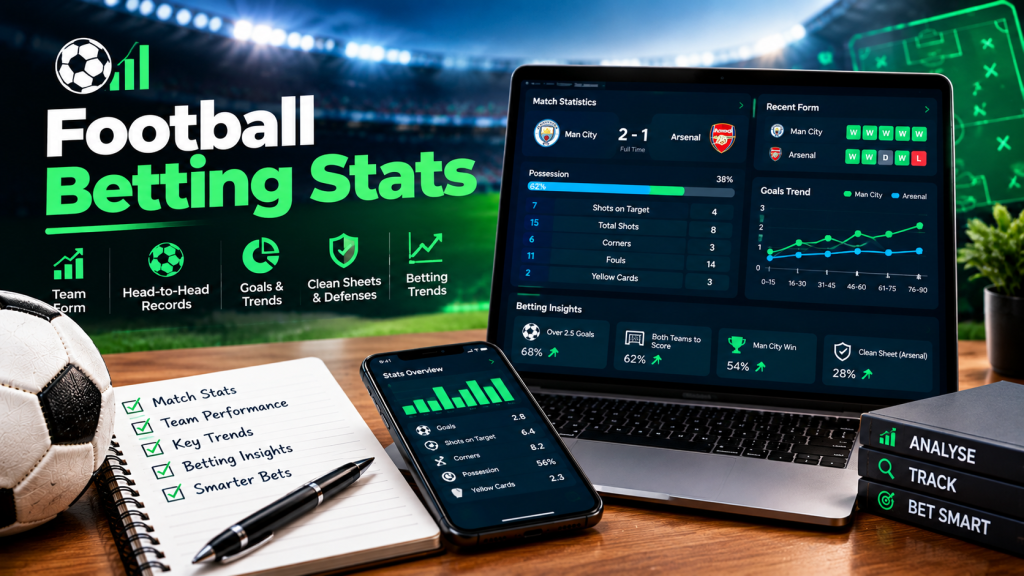
Football betting stats are everywhere, but not all of them help you make better predictions. Bettors often get overwhelmed by data, from possession percentages to pass completion rates, without knowing which numbers actually influence match outcomes. This guide breaks down the football betting stats worth paying attention to, how to use them properly, and how to turn raw numbers into smarter predictions and stakes.
Why Stats Alone Do Not Guarantee a Win
Before diving into specific numbers, it helps to set expectations correctly. Statistics describe what has already happened, not what will definitely happen next. A team with strong attacking stats can still have an off day, and an underdog with modest numbers can produce a surprise result. The goal of using football betting stats is to shift the odds of a good decision in your favor, not to predict outcomes with certainty.
Bettors who treat stats as one input among several, alongside team news and match context, tend to make more consistent decisions than those who rely purely on numbers or purely on instinct.
The Football Betting Stats Worth Tracking
Not every statistic carries the same weight. Here are the ones that consistently matter for building a solid prediction.
1. Goals Scored and Conceded
This is the most basic but essential stat. Look at average goals scored and conceded per match over the last five to ten games, separated by home and away performance. A team averaging two goals scored at home but only one on the road tells you something important about where their strength lies.
2. Expected Goals (xG)
Expected goals measure the quality of chances a team creates and concedes, rather than just the final scoreline. A team that wins 1-0 but has a low xG may have been fortunate, while a team that loses 1-0 with a high xG may have simply had bad luck in front of goal. Tracking xG over several matches gives a clearer picture of true attacking and defensive quality than results alone.
3. Shots on Target
This stat shows how often a team is actually testing the goalkeeper, not just attempting shots. A team with high shot volume but low shots on target may be generating chances without real quality, which matters when predicting markets like total goals.
4. Clean Sheets and Defensive Record
Checking how often a team keeps a clean sheet, and how many goals they typically concede per match, is especially useful for markets like both teams to score or under goals predictions.
5. Home and Away Splits
Combining home and away form into one average can hide important patterns. Always look at these as separate stats, since some teams perform very differently depending on venue.
6. Head to Head Stats
Beyond just who won the last meeting, look at goals scored in previous encounters, how often both teams scored, and whether one side has a historical edge regardless of current form.
7. Recent Form Trend
A simple win, draw, loss pattern over the last five or six matches shows momentum. A team on a three match winning streak carries different psychological weight than one that has lost three in a row, even if their season long stats look similar.
8. Discipline Stats
Cards and fouls per match can hint at how a team defends. A side that commits frequent fouls in dangerous areas may be more likely to concede from set pieces, which matters for certain goal based markets.
Turning Stats Into Predictions
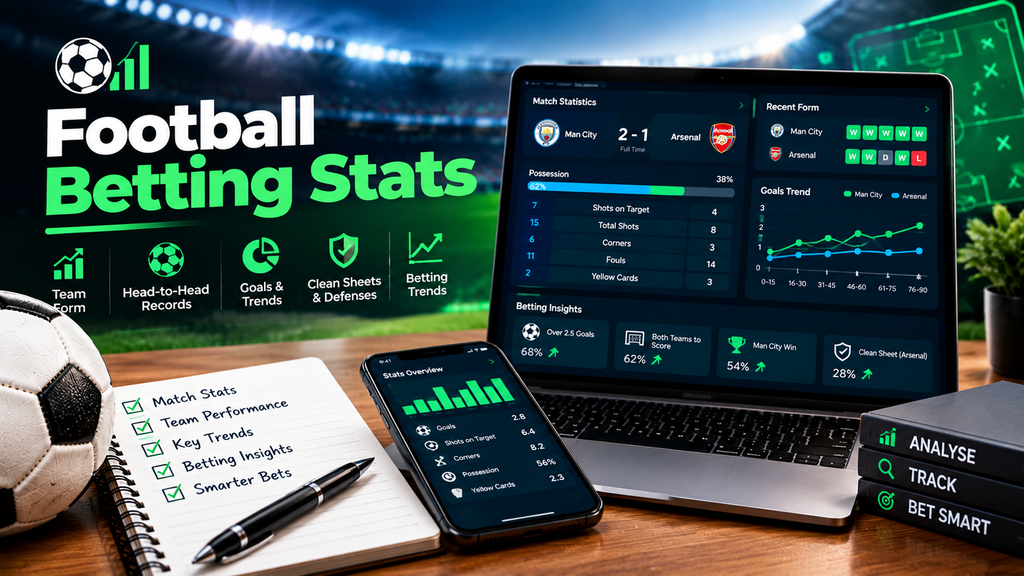
Once you have gathered the relevant stats, the next step is combining them into an actual prediction rather than just collecting numbers.
Compare, Do Not Isolate
Never look at one team’s stats in isolation. Compare both sides directly. A team averaging two goals scored per match means less if their opponent also averages two goals conceded per match, since that combination increases the likelihood of a high scoring game.
Weigh Recent Data More Heavily
Stats from the last five matches should generally carry more weight than season long averages, since they better reflect current form, fitness, and confidence levels.
Cross Check With Team News
Strong stats built with a key player in the lineup mean less if that player is now injured or suspended. Always confirm current squad news before finalizing a prediction based on historical numbers.
Use Stats to Choose the Right Market
Stats do not just help predict who wins. They often point more clearly toward specific markets. Strong attacking stats on both sides may point toward over goals or both teams to score, while two defensively solid teams might suggest a tighter, lower scoring match.
Where Platforms Like 8Xbet Fit Into Stats Based Betting
Betting platforms such as 8Xbet often display pre match statistics, recent form, and head to head data directly alongside the odds for a fixture. This makes it easier to cross check your own research against the numbers the platform highlights before placing a bet.
Having markets like over or under goals, both teams to score, and Asian handicap available on the same platform, such as 8Xbet, means your stats based predictions can be matched directly to the market that reflects them best, instead of defaulting to a simple match winner bet.
Live odds movement on these platforms can also serve as an additional data point. A shift in odds close to kickoff sometimes reflects information not yet fully reflected in public statistics, such as late team news.
Common Mistakes When Using Football Betting Stats
Overloading on too many stats at once. Trying to analyze every available number for a match often leads to confusion rather than clarity. Focus on the handful of stats that are genuinely relevant to your prediction.
Ignoring context behind the numbers. A team’s strong away record might have been built against weaker opposition. Always consider who the stats were generated against.
Using outdated data. Stats from earlier in the season can become misleading if a team’s form, lineup, or tactics have changed significantly since then.
Treating stats as guarantees. Even a statistically strong prediction can lose. Stats improve the odds of a good decision, not the certainty of a specific result.
Skipping the staking side entirely. Good stats based research means little if paired with careless staking. A strong prediction still needs a sensible stake size relative to your bankroll.
Pairing Stats With Smart Staking
Once your stats point toward a confident prediction, staking should reflect that confidence without being reckless.
- Stake a consistent percentage of your bankroll per bet, typically one to five percent.
- Increase your stake slightly for predictions backed by strong, consistent stats across multiple categories.
- Keep stakes lower for matches where the stats are mixed or unclear.
- Avoid increasing your stake simply because the stats look impressive on paper, without considering team news or match context.
A Simple Stats Based Research Routine
To make this repeatable rather than random, try this basic weekly process.
- Shortlist your matches for the week.
- Pull recent form, goals scored and conceded, and home or away splits for each team.
- Check expected goals and shots on target if available.
- Review head to head stats for historical patterns.
- Confirm current team news to validate whether the stats still apply.
- Match your findings to the most suitable betting market.
- Place your stake through a platform such as 8Xbet, sized according to your bankroll and confidence level.
- Record the stats used, the prediction, and the outcome for future review.
Reviewing these records regularly helps you learn which stats have actually been predictive for your betting style, rather than assuming all numbers carry equal weight.
A Note on Responsible Betting
Football betting stats can sharpen your decision making, but they cannot eliminate the unpredictability of the sport. Upsets and unexpected results happen regardless of how strong the underlying numbers look. Always bet with money you can afford to lose, set clear limits, and treat betting as entertainment rather than a guaranteed source of income.
In Conclusion
Football betting stats are most useful when treated as a tool for better decision making, not a shortcut to certain wins. Focusing on the right numbers, such as goals data, expected goals, and home or away splits, while cross checking them against current team news, leads to stronger predictions than relying on raw instinct alone.
Whether you are reviewing stats directly on a platform like 8Xbet or gathering data independently, combining solid analysis with disciplined staking is what turns numbers into a genuinely useful betting habit.